

Sources Push Back on Assertion That AI Will Replace CEOs
Four CEOs believe in superpowers of AI for leadership. Sources that Communication Intelligence spoke to aren't so sure that it has what the role and people demand
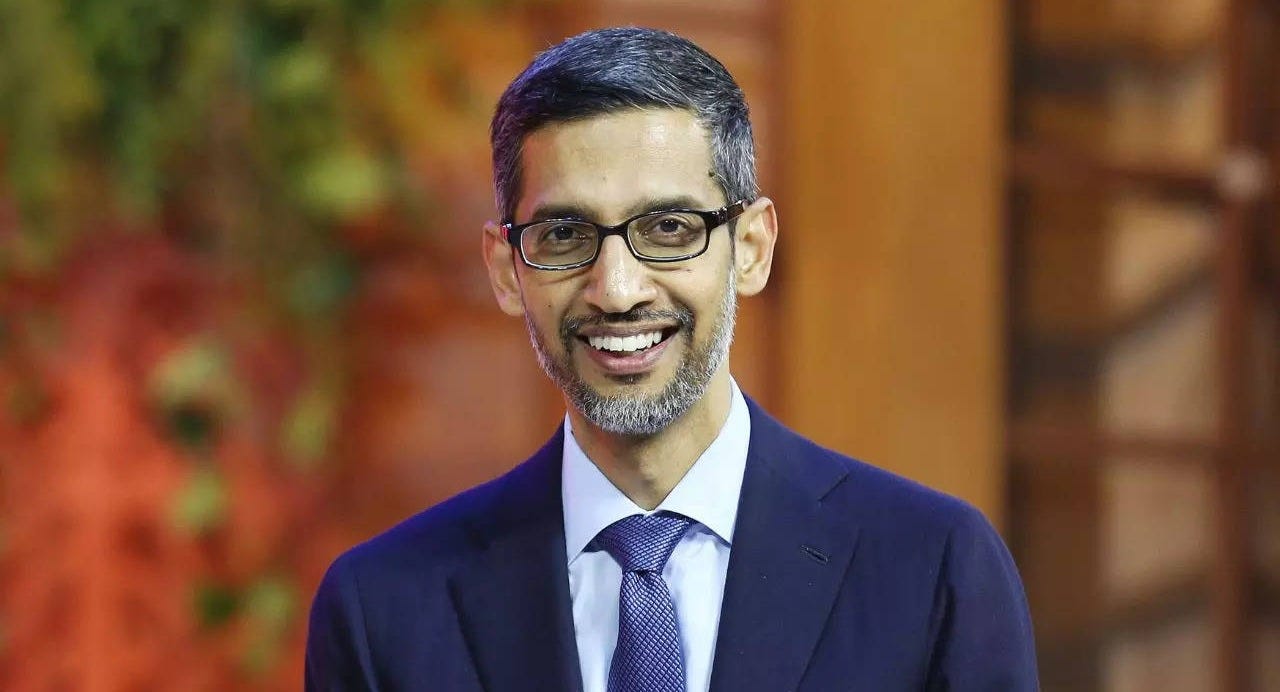
What seemed impossible in the beginning of artificial intelligence is at least now a discussion point among some chief executive officers: the technology’s potential andn impact on the role and job security.
“I think what a CEO does is maybe one of the easier things for an AI to do one day,” Google CEO Sundar Pichai said in an interview with the BBC.
He’s not the only one who has thought about it and was willing to publicly express themselves on the topic. A simple Google AI search finding revealed:
Sam Altman, OpenAI CEO: Has repeatedly expressed his belief that AI will eventually be able to run a company better than a human. He has stated he would be “ashamed” if OpenAI is not the first major company run by an AI CEO.
Sebastian Siemiatkowski, Klarna CEO: Wrote that AI is “capable of doing all our jobs, my own included.”
Mo Gawdat, former Google X Chief Business Officer: Argued that “most incompetent CEOs will be replaced” by Artificial General Intelligence (AGI), which will be better at everything than most humans.
Eye opening and a lot to digest maybe for CEOs and their future.
At the present moment, without much imagination, this may seem difficult to grasp and not something which organizations, boards of directors or investors would consider giving their approval.
A two-part question could be just how likely is this to come to pass anytime soon and what time frame could CEOs and society be looking at if it’s inevitable.
Communication Intelligence discussed AI’s looming presence over the top office in organizations with three sources in this two-question, deep-dive, special report.
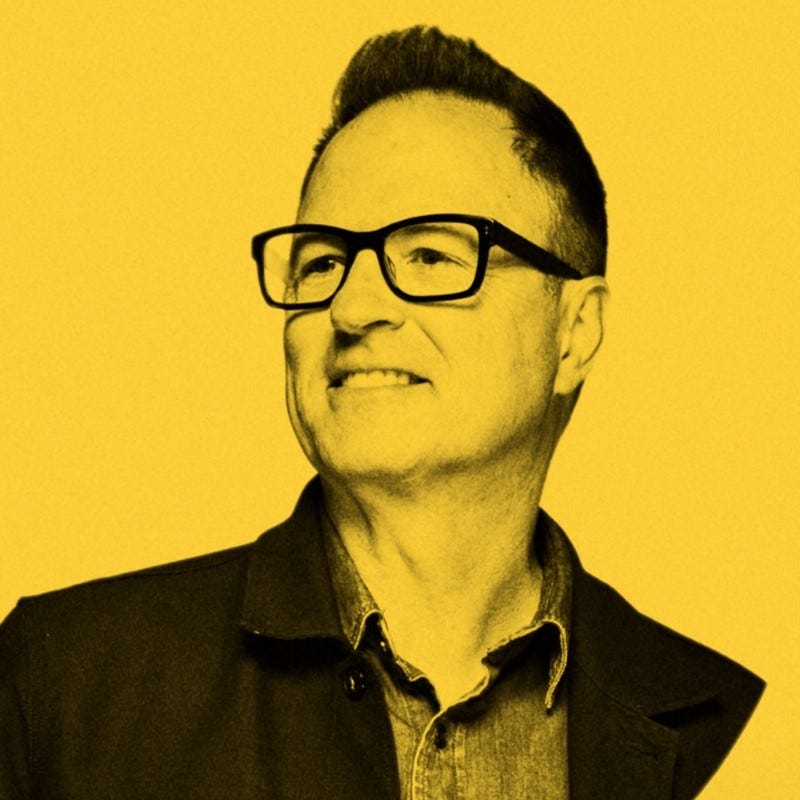
“Pichai’s statement says more about Silicon Valley’s philosophical understanding of the world than it does the actual nature of executive leadership,” says Bob Hutchins, a behavioral and organizational psychologist and CEO at Human Voice Media, where he helps leaders navigate opportunities and challenges related to digital technologies and human-centered approaches.
“The statement presumes that the work of a CEO can be reduced to data processing, pattern recognition and optimization. That’s a profound misunderstanding of the role.”
He elaborates as to what AI would have to be competent and better at to even be considered an alternative to top-level, human leadership.
“The primary function of a CEO is sense-making in complex, high-stakes situations,” Hutchins says. “They operate at the intersection of competing interests, cultural nuance, ethical ambiguity and the messiness of human behavior, which is difficult to quantify or algorithmically resolve.
“They make judgment calls with incomplete or conflicting data, build trust, shape culture and embody an organization’s values through their presence and relationships. Could AI perform certain aspects of a CEO’s job? Certainly: financial modeling, operational efficiency, market analysis.”
That’s not the full scope of the office’s responsibility.
“But that’s not the core work of leadership, that’s not the work that actually matters,” Hutchins stresses. “The true value of a CEO lies in their ability to lead in a way that is relational and contextual. That requires judgment born of experience, not just pattern recognition.”
He dives deeper.
“CEOs do not just make decisions, they absorb organizational anxiety,” Hutchins continues. “They hold space for the unknown and the uncertain. They make meaning when there is confusion or crisis.
“These are human capacities that cannot be automated.”
He admits that the technology is already accomplishing some level of executive work.
“If the question is, how long until we see a board experiment with AI leadership structures, we’re already there,” Hutchins says. “Companies are using AI to inform strategy or run scenario planning but a fully autonomous, completely-independent AI CEO? Decades away, if ever.”
He confessed his curiosity as to why a technology leader or multiple ones, would even imply that human replacement was probable and soon to come.
“The bigger question to my mind is why someone like Pichai would say this in the first place,” Hutchins says.
“It’s a reflection of a techno-solutionist mindset that views human complexity as a problem to be solved rather than a lived reality to be navigated.”
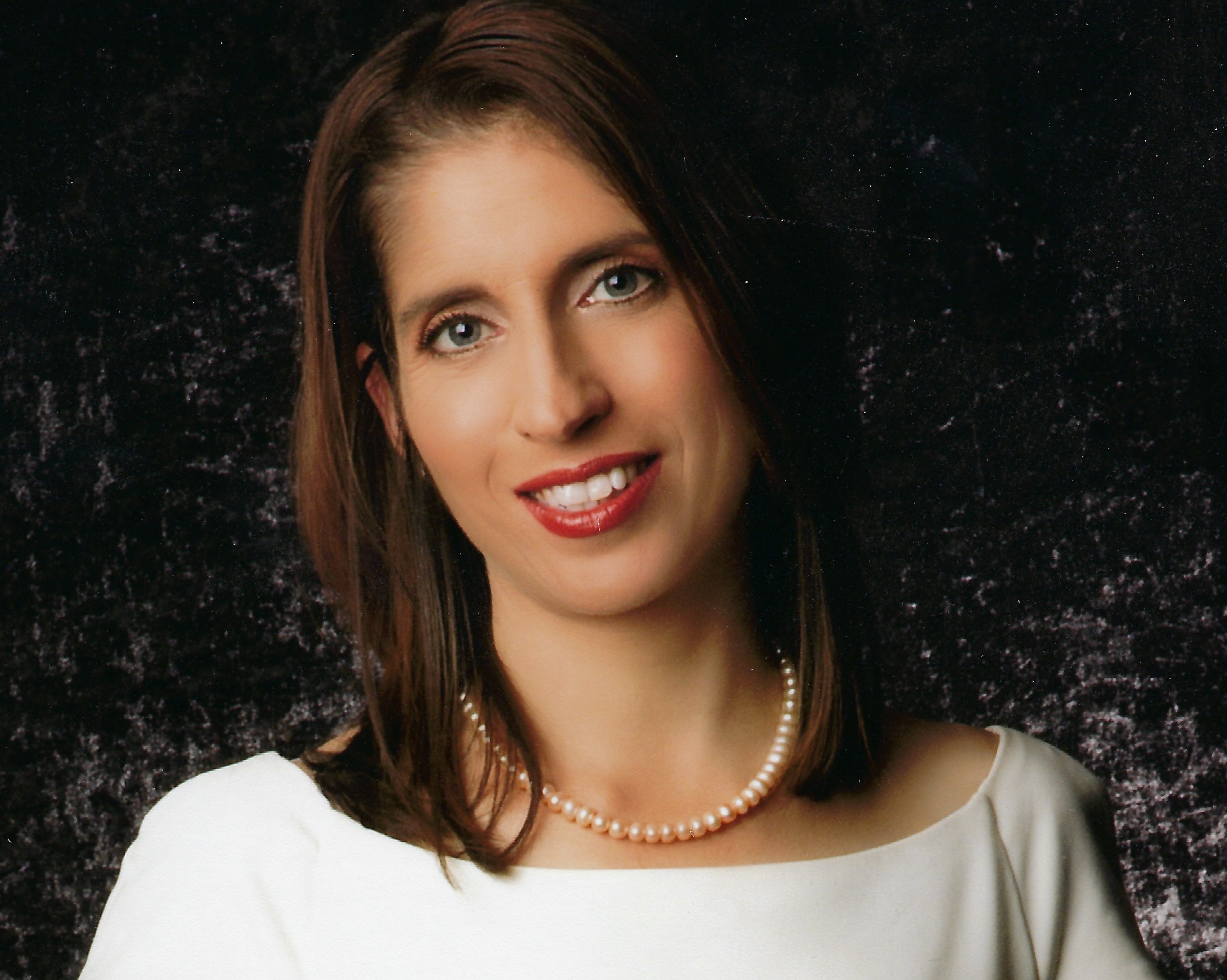
“Replacing a CEO with AI is extremely unlikely, not because the technology won’t evolve, but because the CEO role is far more complex than people assume,” asserts Zivit Inbar, PhD, a non-executive director and founder at DifferenThinking, who specializes in leadership, organizational culture and responsible AI governance.
“A CEO’s real work is judgment, ethical decision-making, leadership, navigating uncertainty, influencing stakeholders and managing culture,” she explains.
“These are deeply human domains.”
Inbar details what AI can do well and where it is incapable or insufficient.
“In my upcoming Routledge book, I explain that AI can support decision-making, provide insight and reduce information noise,” she explains. “Still, it cannot take accountability, set values, build trust or lead people. These are the foundations of good leadership and AI cannot replicate them.”
Inbar does see the capacities and benefits.
“Could AI automate parts of the CEO role?” she asks. “Absolutely! Data analysis, forecasting, pattern recognition, scenario modeling. But replacing a CEO?
“Boards would not accept it, nor would regulators or investors. I see AI becoming a powerful tool for CEOs, not a substitute.”
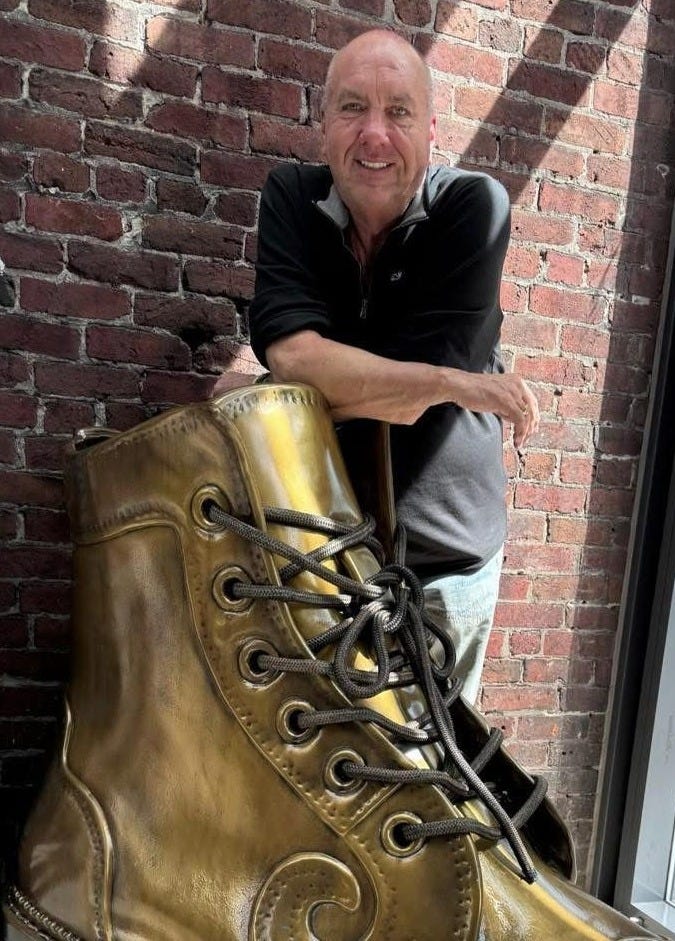
“AI will definitely reshape the CEO role but it won’t replace it anytime soon,” says Wayne Elsey, a social entrepreneur, philanthropist, author and founder at Funds2Orgs, which helps people trade in gently worn, used and new shoes.
“Leading a company requires emotional intelligence, trust-building and human judgment, qualities that AI simply can’t replicate.”
He agrees that the technology has value yet, it’s not comprehensive.
“AI can be a very powerful decision-support tool but the idea of a fully AI-run company is still far off,” Elsey says.
“Companies need leaders who can understand people, not just data.”

Board of directors and investors will, of course, have a strong voice in any such debate.
“Boards need total transparency in how AI makes decisions,” Elsey says. “Clear legal and ethical frameworks and guarantees around security, culture and long-term strategy.
“We also need evidence that AI can consistently make sound decisions in real-world, human-centered situations. Until those conditions exist, AI may assist leaders, but it won’t replace them.”
The Obvious Isn’t Being Discussed
“Boards and investors need someone to hold accountable,” Inbar says. “Accountability is at the center of governance. AI cannot explain its reasoning, take responsibility or stand before a board, regulator or court. It cannot be dismissed or sanctioned.”
She adds that “for an AI CEO to even be” a possibility, “boards would need” requirements met, such as:
• Full auditability and traceability of decisions
• Clear lines of responsibility for failures
• Regulatory approval
• Evidence that AI can understand context, values, emotions, ethics and stakeholder management
• Social acceptance
“None of these conditions exist today and may never exist at the level required for CEO responsibility,” Inbar says.
“Boards and investors want the opposite of an AI CEO — they want human leaders who know how to use AI wisely, safely and with good judgment.
“They want leaders with strong ethical foundations who understand risk, culture and the organization’s purpose.”
It’s Not Happening
Hutchins isn’t in line with forecasting the breakthrough that the tech leaders believe is on the near horizon.
“If boards and investors were seriously considering an AI CEO, we would need to see a fundamental shift in our definitions of success and accountability,” he states.
“Boards hire CEOs today, not just for competence but for character, cultural fit and the ability to navigate unpredictable situations. They want someone who can execute a strategy but also represent the organization publicly and deal with the unexpected with resilience and ethical integrity.
“The burden would be on an AI to demonstrate all of those qualities and the bar there is impossibly high.”
Extensive and Conclusive Evidence Required
“First, boards would want proof of concept,” Hutchins says.
“They would want to see evidence that AI systems can make executive-level decisions in test environments with demonstrably-better outcomes than human leaders,” he stresses. “That’s a challenging proposition.”
Reality
“Leadership is difficult to measure, especially the value of a CEO who averts a crisis or whose decisions build long-term organizational resilience, despite short-term costs,” Hutchins argues.
“Second, there are legal and regulatory issues of accountability that would need to be sorted out,” he adds.
“What happens if an AI CEO makes a decision that leads the company to tank or makes an unethical choice? Who is liable? The board? The programmers? The algorithm itself?
“Our legal frameworks are predicated on human decision making and human culpability. We’re far from having those adapted for AI leaders.
Investors
“Investors would demand transparency, they would want to understand the decision-making process of the AI, not just accept it as a black box. That runs counter to many advanced AI systems, which are not easily explainable,” Hutchins says.
“If you can’t explain why an AI recommended a strategic merger or a series of layoffs, then you have a governance issue. Boards have fiduciary responsibilities which they cannot outsource to systems they do not understand.”
The People Truth
“There is the human element,” Hutchins says. “Organizations are human systems.”
AI is not necessarily an improvement over people as CEOs.
“Employees need to believe their leaders care about more than efficiency metrics,” Hutchins says. “An AI might generate an optimal strategic plan but can it inspire loyalty, navigate office politics, mediate executive conflicts or embody the organization’s values in a crisis?
“These are deeply-relational capacities which matter.”
Priorities
“We’d need a shift in investor priorities,” Hutchins begins. “While investors care about returns, they also care about risk, reputation and long term sustainability.
“An AI CEO might optimize for short term gains while neglecting aspects like cultural health or ethical considerations that don’t directly impact the bottom line.
“Investors would need to be assured that an AI could balance these factors in ways that align with broader human values.”

What If, Though: AI in the Role of CEO
“We would need AI systems that can convincingly demonstrate adaptability, not just mimicry of pattern recognition,” Hutchins argues.
This means further technology development maybe and definitely an adjusted way of thinking and process.
“We would need new governance models to accommodate these hybrid human-AI leadership structures,” Hutchins says.
“We would need cultural acceptance of non-human entities in roles that have moral and ethical significance. And we would need to answer more profound questions about what we actually want from our leaders.”
What He Sees Moving Forward
“I suspect we’ll see more hybrid models before we see complete replacement,” Hutchins says. “AI systems may take on more tactical decisions while humans focus on strategy, culture and relationship building with stakeholders.
“But even that demands careful consideration,” Hutchins points out, because, “The danger is that we automate what makes leadership human, leaving us with a shallow, transactional version of the role.”
In Conclusion
“The greater risk in my view is that Pichai’s comment becomes a self-fulfilling prophecy,” Hutchins says. “If we treat CEOs as glorified data analysts, we will attract those who think that way.”
That would be shortsighted and come at an unwanted cost, he asserts.
“The result will be organizations that optimize for efficiency while missing out on deeper aspects of purpose, meaning and the beautiful, messy complexity of human collaboration.”
Communication Intelligence began as online magazine (2021-2024) on another platform and during that time, also became a free-or-paid newsletter on Substack. The C.I. brand additionally offers individuals and organizations a variety of services, from written communications as well as communication consulting and coaching.
The newsletter is written by a former newspaper reporter, magazine writer, talk show host and communications consultant and advisor.

Phenomenally reported and researched exploration of a question everyone in leadership is quietly wrestling with. Hutchins nails the distinction between data processing and sense-making, that's the crux most tech evangelists gloss over. What resonated most was his framing of CEOs as people who "absorb organizational anxiety." That's not an algorithmic task. You could theoretically train a model on every proxy battle, restructuring, and stakeholder conflict in recorded history, but pattern-matching crisis scenarios stil wont replicate the capacity to hold space for uncertainty and human complexity when institutional legitimacy hangs in the balance.