

Writing From Inside the Fire
From an Australian detention center, Stephen Keating’s 'The Unshackled Project' is rewriting the blueprint for justice-system mental health support
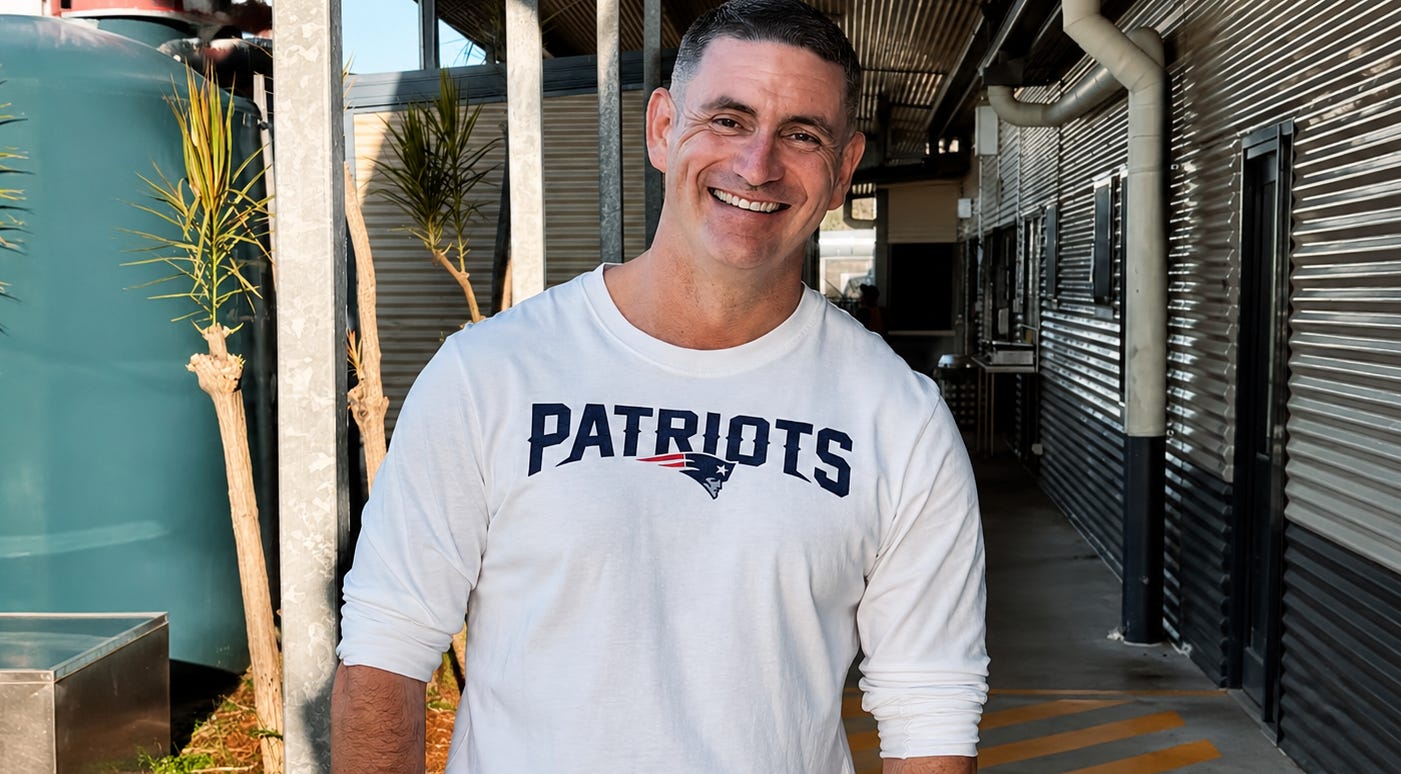
For two-plus years, a former corporate professional has had his body, not his mind, confined, which has been the latest turn in a decade-long journey through legal troubles, freedom and family and then, an unexpected detention, where he is today.
Deciding against apathy and cognitive rot, Stephen Keating chose to write and publish the Unshackled newsletter on Substack, as part of his initiative, The Unshackled Project.
The initial goal, to engage with and serve others with a focus on mental freedom, evolved into a commitment beyond that to address raw, real, emotional and psychological needs of people in the justice system.
“The Unshackled concept isn’t just about physical circumstances,” Keating says, “but about not being a prisoner of your own mind.”
“A lot of what I write comes directly from lived experience in detention or prison but I always try to translate it into something that applies to everyday life as well, because those same mental struggles exist everywhere, not just in custody.”
He is now zeroed in on fulfilling a weakness and need that he sees as significant.
“My focus has shifted towards mental health, particularly for people impacted by the justice system,” Keating says. “While the tools and ideas I work with can apply broadly, my main concern is addressing the gap that exists in support for people who have lived experience of incarceration or detention.”

Keating’s life, detached from family and outside interactions gave him an abundance of time to think. He decided, for his well-being, that he needed to focus outward.
“I’d been in immigration detention for about a year and was looking for some sense of purpose,” he says. “I wanted something that would keep my mind active and, hopefully, allow me to help people in some way.”
Keating recalled that his ability to communicate through the written word was “reasonably decent” in school, so he decided to ask strangers a question.
“I put a post on my personal social media, asking if anyone would be interested in reading a weekly blog from me about life, mindset, resilience and whatever else was on my mind,” he says.
“The response was far more positive than I expected.”
Keating started small, with a weekly post and during that time, he noticed something.
“Readers seemed to connect with the honesty and vulnerability. I was writing openly about struggles, setbacks, personal growth and lessons I was learning along the way, and people were resonating with that,” Keating says.
This resulted in readers sharing their personal stories with him about how his writing, “had helped them through a difficult period,” he adds.
Keating was moved by the responses and used that feedback as fuel to serve, regardless of his own struggles and pain.
“Those conversations have probably been the biggest reason I’ve continued,” he says. “Knowing that something written from a detention center can positively impact someone’s life on the outside is incredibly rewarding.”

In serving others inside the center and gradually developing receptiveness to the work, another question came to mind.
“It was only after doing that for quite some time that I wondered whether a book like it already existed,” Keating thought to himself. “When I started looking, I came across Ryan Holiday’s, The Daily Stoic. I remember thinking that it was remarkably similar in concept to what we’d already been doing inside detention.
“The difference was that my reflections were being written from lived experience, in real time, from inside the fire rather than looking back at it.”
He recognized the difference as an opportunity, one that ignited a commitment in him to write his book, “Unshackled: A Daily Diary for Inner Freedom.”
Keating discovered something comforting, encouraging and empowering in hardship.
“In a place where so much is outside your control, writing became one thing that was completely mine,” he says. “It gave me purpose, connection and a way to turn a difficult experience into something that might help somebody else.
“That’s what keeps me showing up each week.”
It could lead a person to wonder what was was most resonating with readers, leading to a growing followership and subscriber base.
“I think vulnerability has probably been the biggest factor,” Keating has determined.
”When you’re willing to put yourself out there, acknowledge your mistakes, admit your fears and share the lessons you’ve learned from difficult experiences, people tend to connect with that.”
He goes deeper to summarize this conclusion.
“None of us have it all figured out and I think readers appreciate honesty more than perfection,” Keating says.

Diversity in his surroundings has enriched the lens in which he views the world and his observations and interactions have provided him with new ideas.
“I’m surrounded by people from all walks of life, all carrying different struggles, hopes and stories,” Keating says. “Almost every week, a conversation, an observation or a passing comment sparks an idea. I sit with it, think it through and eventually turn it into something worth sharing.”
It wasn’t always easy to continue with his mission. There was disappointment and doubt and that was an occasional challenge to contend with and overcome.
“There are times when writing can feel like shouting into the void. You hit publish and wonder if anyone is really reading beyond the headline,” he admits.
“Then a message arrives or someone references an article you wrote months earlier and you’re reminded that the words are landing somewhere.
“Those moments provide enough fuel for the next article and the one after that.”
He was noticed by leaders in his facility and offered opportunities, which he accepted.
“It led to running workshops with the guys here in detention, it pushed me to begin studying a diploma in counseling and it eventually led to writing two books, which I never set out to do when I first started,” he explains.
In those experiences and feedback he received, his compassion grew to the point he was stepping into unexpected territory.
“It has also pulled me into a much broader space around mental health and judicially affected people,” Keating says.
“I’ve been invited to speak on panels and at events ranging from Africa to the United States and here in Australia. In some cases I’ve been speaking while still in custody, which adds a very raw and grounded perspective for people listening on the outside.”
He was and remains encouraged by what he has observed because it was fulfilling.
“I think the most fulfilling part is what it has become the foundation for: It has shaped a sense of purpose around wanting to contribute to change within the justice and mental health space,” Keating says.
“For me, that comes down to something quite simple: I believe support in this space works best when it combines lived experience with proper mental health training and accreditation. You need both. One without the other is incomplete.”
He reiterates and that it was downstream from his decision to write and commit to it.
“It gave me a way to process what I was going through but it also became a platform that connected me to other people, other systems and ultimately a larger purpose,” Keating says.
This led him to build “a library” of his writing where he is now building on his website, a space “where people can essentially ‘pull a book off the shelf’ and choose articles based on whatever they are going through,” Keating says.
“The idea is to make it accessible, so someone can land on a topic that actually resonates with them in that moment, rather than just scrolling through content.”

The opportunity for improvement that Keating recognizes is the bigger picture, beyond his own plight, which is to serve other suffering people.
“My intention is to overload the system in a sense, not in a disruptive way, but by making practical support as accessible as possible for people who often find themselves entering the justice system without any real guidance or emotional support,” Keating says.
“From my own experience, I know how quickly people can spiral when they are arrested or caught up in that environment and how a lack of early support can lead to further mistakes.”
Keating’s mission is to change a glaring, problematic reality. He knows that a more rich understanding, from different angles, can do what isn’t yet being accomplished.
Keating’s vision for The Unshackled Project is clear. He is advocating “building a new kind of workforce within this space.”
Subscribe for free (or paid for additional benefits)
Communication Intelligence is a newsletter of interviews, analysis, insights and recommendations, as well contributor’s Insights & Advisory.
This next week, the newsletter will debut both the Intelligence Brief and the CI Column, as new features, for paid subscribers.
In addition to the newsletter, Communication Intelligence is offering something I hope will be practical and valuable: Executive Editorial Services.
These items are to help communicate in a more personalized, bold, effective manner. The deliverables are from a human with professional judgment and nuance, not AI.
You can learn more at this link within the newsletter.

Publisher’s Note: Stephen Keating offers free online courses based around “what I call the 4A method: awareness, accountability, agency and action.
“It’s a practical framework I use to navigate situations and make better decisions and I’ve seen how it can be applied in very real, difficult circumstances.”