Extreme Perseverance: Why So and When Not
Why and When it breaks through problems and when it might not
Some people show a greater, almost unimaginable capacity for perseverance and it leads them to where other people don’t reach. What drives it seems like a mystery.
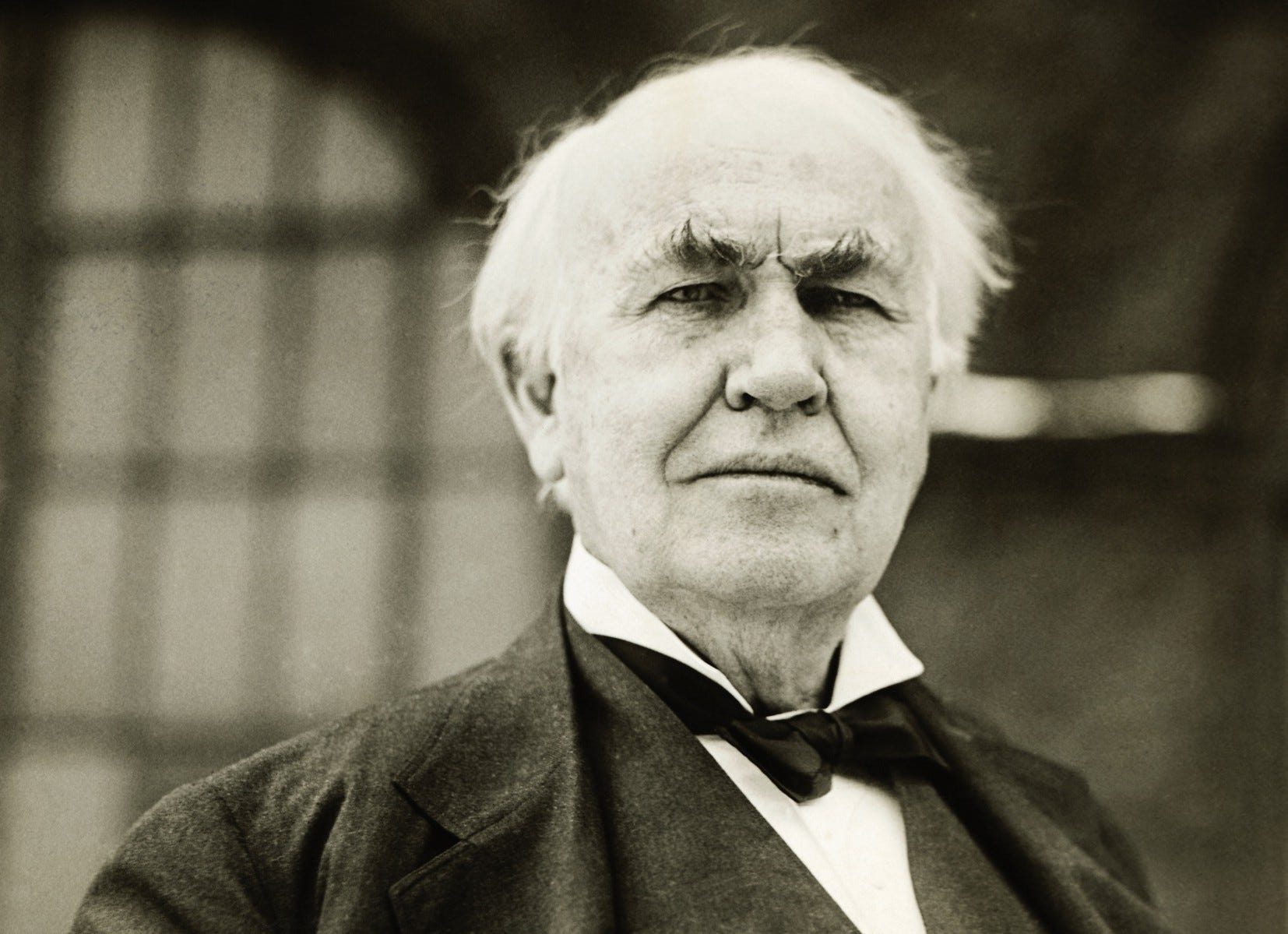
“I have not failed. I've just found 10,000 ways that won't work,” said Thomas Edison, world-famous inventor, businessman and industrialist whose work paved the way for electricity, recorded sound and motion pictures.
There has to be a specific strength as an impetus for that level of unwavering commitment to endure long-lasting struggle, disappointment, frustration and dejection.
Most people don’t want to remain engaged in repeated, long-suffering dead ends.
This two-question, multi-source examination goes in depth about what helps people weather the repeated failed experiments of “ways that won’t work” and what the line is for continuing or ending a pursuit.

“People don’t persevere because they enjoy struggle or because they are unusually motivated,” says Emir Baycan, cognitive decision-making researcher and founder at What’s Your IQ. “They persist when failure continues to teach them something.”
“As long as effort produces insight, even small or incremental insight, the struggle feels meaningful, rather than pointless.”
Baycan points to the visionary and inventor and what he sees from him.
“Edison’s persistence makes sense when you see failure as information, rather than defeat,” he says. “Each attempt narrowed the space of what could work. That changes how frustration is experienced. Instead of feeling like wasted effort, it becomes part of a learning process.”
There’s additional psychological component that is important.
“Another factor is how people frame progress internally,” Baycan adds.
“Those who last tend to track progress by what they understand better, not by how close they are to success,” he explains. “When progress is defined only by outcomes, most people quit early. When it’s defined by learning, persistence becomes psychologically sustainable.”

The vividness of the end goal matters.
“What drives that kind of perseverance isn’t usually ego or blind optimism, it’s purpose. People who endure long periods of struggle tend to care deeply about the problem they’re trying to solve, not just the outcome,” says Pallavi Pande, founder at DTOCS, which creates compostable tableware for events and founder at DTOCS Consulting, which helps brands grow on Amazon.
“When the work itself feels meaningful, setbacks don’t feel like dead ends; they feel like part of the process,” she adds.
“I’ve noticed that people who keep going also separate failure from self-worth. They don’t see a setback as a personal verdict. They see it as feedback. That mindset makes it easier to stay curious instead of discouraged.”
Fully grasping a certain reality and making peace with it can empower commitment.
“There’s also a quiet resilience that comes from accepting that progress is rarely neat or fast,” Pande says. “Perseverance often comes from understanding that frustration is not a sign to stop but a sign that you’re learning something new.”

“The drive to push through such long-lasting challenges isn't just about being optimistic; it's really about what we call ‘Epistemic Curiosity,’ that deep-seated urge to figure out something unknown,” says Suzann Robins, a social science professor, relationship and health therapist and the author of “Exploring Intimacy: Cultivating Healthy Relationships through Insight and Intuition.”
She elaborates:
“Take an innovator like Edison, for instance. When he faced a ‘failed’ experiment, he didn't let frustration get the best of him. Instead, he experienced a rush of dopamine from eliminating a variable.
“Failure wasn't a personal indictment of his skills; it was just another piece of data. This separation of one's identity from the outcome is what keeps disappointment at bay.
”When the goal is to uncover a truth instead of just snagging a quick win, the struggle transforms into a vital part of the research journey rather than a hurdle to overcome.”
It’s valuable to question the importance of value of the outcome and the endeavor it takes to get there.
“When you remove people’s ego and social pressures, perseverance, in my opinion, comes down to the question: Is the fundamental problem I’m solving, still worth solving?” says Andy Wright, co-founder at Resnova.io, a specialist insurance consulting firm that provides strategic, regulatory, and operational expertise.
It’s a point on which Guery Cordovadisla, co-founder at Domepeace, a direct-to-consumer scalp-care brand built for bald men, agrees.
“When the problem matters, setbacks feel like information, instead of personal failure.
“Also look for small proof. One customer paying. One repeat order. One sign that something improved. Those small signals are enough to keep going, even when progress feels slow.”
Cordovadisla talks about a particular technique that is necessary.
“The other factor is emotional distance,” he says. “The people who endure don’t say ‘I failed.’ They say ‘that attempt didn’t work.’ That mindset keeps them in the game long enough for things to compound.”

“At sea, failure is constant: weather shifts, supplies run out, plans collapse,” says Victoria Vanransom, yacht chef and author of “The Captain’s Cook.”
“You learn quickly that perseverance isn’t heroic. It’s practical. You adjust, you solve the next problem and you keep moving because stopping isn’t an option.”
Then there is optimism, even if critics often call it blind in nature.
“… our grounded faith in ourself and the belief that things will be better lights the fire that failure or rejection tries to blow out,” says Adrian Jr. A. Maronilla, a content specialist at 20four7VA, a virtual staffing leader.
“You know what’s failure? It’s quitting and not trying at all.”

It's popular among many respected business minds to say that you have to know when to quit and that too many people go on too long, emotionally and financially, entrapping themselves in the sunk-cost fallacy.
These successful people likely, predictably, probably would have scoffed at Edison for not quitting and moving on to more profitable work.
The debate is the line where balance lies, where persevering could be the smart play and worthwhile for an organizational mission, societal benefit or oneself and when is the probability lower that the efforts are chasing will produce sustained breakthrough.
“The real distinction is not between quitting and persisting but between learning and repeating,” Baycan suggests. “Perseverance makes sense when continued effort keeps changing your understanding of the problem. It stops making sense when effort produces the same failure for the same reasons.”
He delves deeper.
“Sunk cost fallacy isn’t about staying too long,” he insists. “It’s about staying without reflection. People fall into it when they continue purely because of past investment, not because new information is emerging.”
Baycan points to Edison as an example as to why he was never stuck in that error.
His “work would have crossed into irrational persistence only if his experiments stopped revealing anything new. They didn’t. His process remained informative,” Baycan states.
“The balance point is reached when feedback flattens, assumptions stop changing and effort no longer improves understanding. At that point, quitting is not failure. It’s accurate judgment.”
Pande is in alignment with that logic.
“Persevering makes sense when each attempt brings clearer insight, sharper strategy or a better understanding of what actually works, even if results are slow,” she says.
“Breakthroughs tend to happen after thoughtful adjustments, not stubborn repetition.”
It’s clear to her when continuing is sheer emotional investment.
“It becomes a sunk cost problem when someone keeps going without adapting, ignoring consistent feedback or sacrificing their health, values or stability just to avoid admitting something isn’t working,” Pande says.
“Quitting isn’t failure when it’s a deliberate decision based on evidence and reflection. The real risk isn’t stopping too soon, it’s continuing without honesty.
“Perseverance with awareness can change outcomes; perseverance without reflection usually just delays a necessary pivot.”

“The smartest people I know quit things all the time, they know which things to walk away from,” argues Wright. “They are ruthless about cutting losses on something that won’t deliver and focus their attention elsewhere.
“Too many people, however, don’t quit, as they’re afraid of their ego being bruised, and (them being) classified as a failure.”
Yes and no, Vanransom has learned.
“If effort is still teaching you something about yourself, your limits, your capabilities then perseverance has value,” she says, “But when you’re repeating the same actions out of fear, pride or obligation, that’s not resilience; that’s avoidance.”
She speaks of what she has witnessed in her work.
“At sea, you don’t argue with conditions you can’t change. You change course. That mindset applies everywhere. The breakthrough isn’t always pushing harder.”
What Counts
“The balance comes down to signals and control,” argues Cordovadisla.
“Persevering makes sense when the problem is real, people are willing to pay and each attempt teaches you something useful. Even small improvements count if the direction is clear.
“It becomes chasing a dead end when nothing changes. No repeat customers. No organic interest. No learning. Just the same results with more effort and a new story each month to explain them.”
He speaks beyond the problem to a helpful exercise.
“A simple test is this: are you improving the inputs you control and is the market responding at all? “ Cordovadisla recommends examining and asking.
“If yes, keep going. If not, it’s usually smarter to change direction or stop before time and money are gone.”

“The key lies in understanding the ‘Quality of the Failure,’” Robins says.
“If you find yourself failing in the same way, over and over, it’s a sign you might be stuck in a sunk cost fallacy or just lacking creativity. On the flip side, if each failure brings something new to the table and helps you map out the problem differently, then sticking with it is the way to go.
“It’s important to know when to walk away, especially if the data shows that your main idea just isn’t holding up. But as long as you’re uncovering fresh insights about why things aren’t working, keep pushing forward.”
There’s exciting potential in doing the latter she teaches.
“Often, the real breakthroughs are just beyond a ‘plateau of latent potential,’ where the small wins might not be obvious to everyone else but are clear as day to the innovator,” Robins says.
Subscribe for free (or paid, for additional benefits)
Follow on LinkedIn for more
Communication Intelligence began as online magazine (2021-2024) on another platform and during that time, also became a free-or-paid newsletter (2023 - present) on Substack. The C.I. brand additionally offers individuals and organizations a variety of services, from written communications as well as communication consulting and coaching.
The newsletter is written by a former newspaper reporter, magazine writer, talk show host and communications consultant and advisor.