

The Leadership Aversion-Exposure Habit
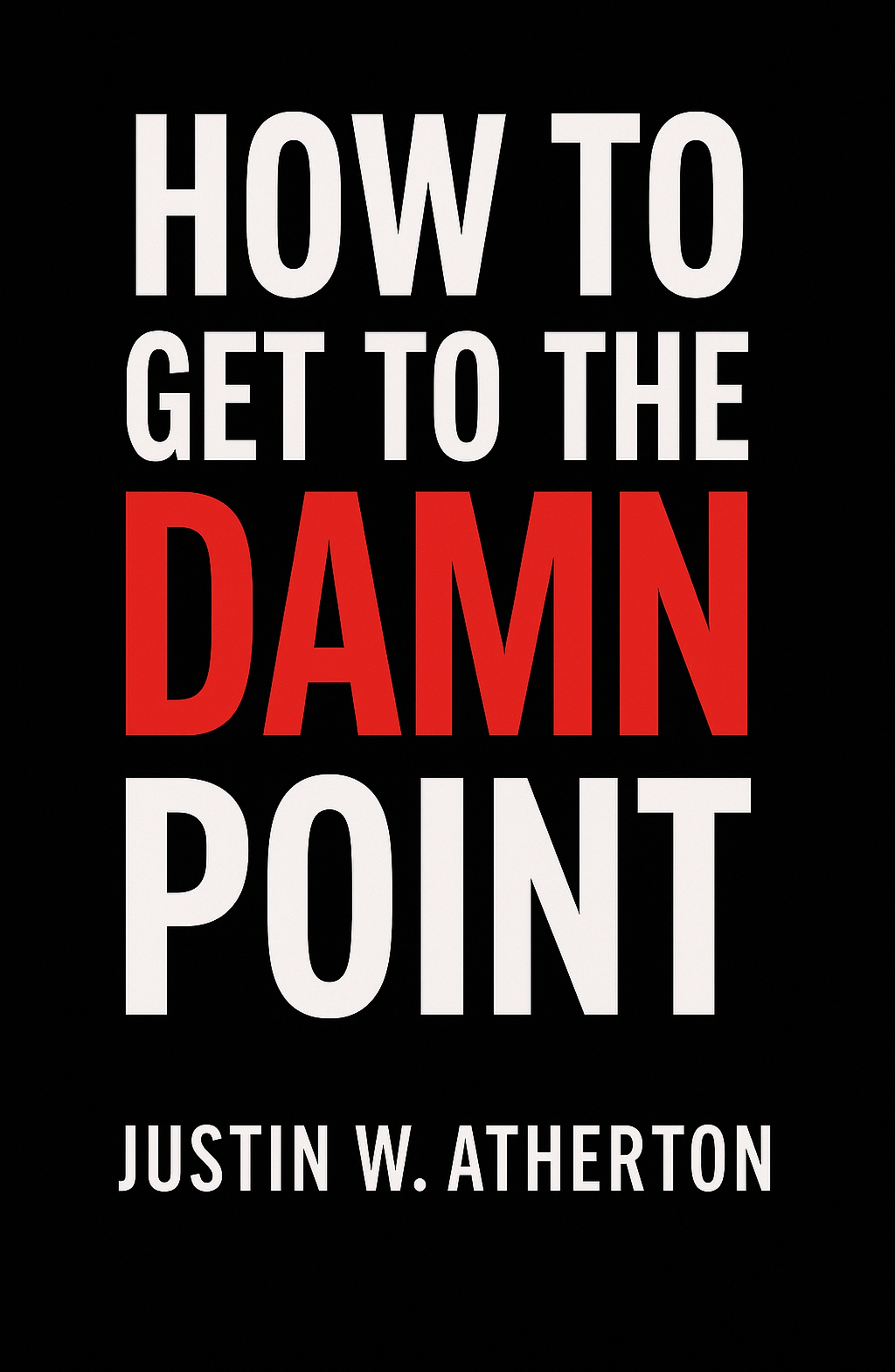
Justin W. Atherton is direct in detailing what ails many organizations' work, what it is costing them and what can beneficially remedy it

False presumptions happen within organizations in both the micro and macro and when they are not clearly identified early, they continue negatively effectiveness and efficiency of outcomes.
Justin W. Atherton has regularly witnessed it, studied it and spoken about it to get the attention of organizational leadership.
The author of “How to Get to the Damn Point” and a speaker — his TEDx Talk, “The Suspect Within,” has drawn on his 20 years in law enforcement as a detective, SWAT breacher and supervisor to challenge leaders “to confront how unclear language quietly erodes authority, execution and trust, even in high-performing organizations.”
That boldness may not be well received by everyone yet some organizations’ curiosity is captured and they prove receptivity to discovery and learning painful truths.
The majority of leaders have come to believe that execution problems are rooted in errors in their strategy. Atherton is convinced is not always factual and accurate.
His conclusion: the gap between a good decision and a good outcome is almost always an issue of language and interpretation and nobody wants to admit it.
“Most organizations don’t have a strategy problem,” Atherton says.
“They have a clarity problem they refuse to own.”
He elaborates on that sharp analysis.
“A decision only matters if it survives translation,” Atherton says. “The moment it leaves the room, it gets filtered through vague language, softened expectations and assumptions that no one verifies. That’s where execution breaks down.
“Not because people are incapable but because they were never given something clear enough to execute in the first place.”
This may come across as shocking or possibly offensive to accomplished, highly-professional, disciplined and precise leaders and communicators. Atherton further explains what he means to illustrate reality.
“Language is the delivery system of every decision. If the language is loose, the outcome will be inconsistent. Every time,” Atherton expresses. “People don’t own it because clear language removes their safety net.”
If this is confusing to those whom he communicates and advises, he goes deeper into the “why” again.
“The moment you say, ‘this is on me,’ or ‘this is exactly what we’re doing,’ you eliminate ambiguity,” Atherton stresses. “There’s no room to reinterpret it later. No room to shift responsibility. That level of clarity feels risky to a lot of leaders.”
That discomfort or fear can result in conscious or subconscious misadjustment that is unhelpful to leadership communication and process.
“So instead, they default to language that gives them an out,” Atherton asserts. “If it works, they take credit. If it doesn’t, they can point back and say it was misunderstood, misaligned or still in discussion.”
This gets to the core.
“That’s the real aversion,” he adds.
“It’s not about communication. It’s about exposure.
“This isn’t a communication issue. It’s avoidance disguised as professionalism.”
This, Atherton learned and concluded long ago, means that “clarity” is much more than communication and a skill, “It’s a leadership obligation.”
Leaders aren’t always cognizant, at least fully — of their thinking, the communication that follows and the impact it shows.
“Most people aren’t as aware as they think, they’ve just normalized it,” Atherton says.
“What starts as intentional avoidance turns into habit. Over time, phrases like ‘we should,’ ‘let’s revisit,’ and ‘circle back’ don’t even register as vague. They sound professional. Collaborative. Safe,” he explains.
What’s problematic about that reality and a developed default, costly blindspot is that in operating in this manner, leaders are, “removing ownership,” Atherton argues.
“At an individual level, people use that language to avoid being pinned down,” he says. “At a team level, it creates shared ambiguity. And at an organizational level, it becomes culture, where everyone sounds aligned but no one is actually accountable.”
He shines a light on the reality of what gets believed in vague language.
“No one says ‘let’s circle back’ because it’s the best move,” Atherton says. “They say it because it delays commitment. It buys time. It keeps the conversation safe without forcing a decision.”
To him, that is, in most situations, unnecessary and an impediment.
“The problem is, it creates the illusion of progress without any real movement. Teams walk out of meetings feeling aligned but nothing actually changed because nothing was clearly assigned or defined,” Atherton argues.
He proposes and recommends an approach for improvement.
“If you’re leading the room, you don’t let vague language stand,” Atherton begins:
“Who owns that?”
“When is that due?”
“What does done look like?”
He makes a distinction about an earlier point and common presumption.
“Clarity isn’t about sounding better. It’s about forcing a decision,” Atherton says.
“If there’s no owner and no deadline, nothing is getting done.”

Leaders don’t always recognize that unclear communication in taking place, the risks involved and the price that may develop.
“Vague communication isn’t harmless,” Atherton says. “It’s expensive.”
He adds that it doesn’t just develop and take place. Worse, “it gets rewarded.”
The “how” reveals itself.
“It starts as self-protection,” Atherton explains. “People soften their language to avoid being wrong, avoid conflict or avoid committing too early. Then, the organization reinforces it:
“The person who speaks vaguely is seen as collaborative.
”The person who speaks directly is seen as too aggressive or too certain.
“So people learn quickly: if you want to stay safe, don’t be precise.”
Then, something dangerous to the environment happens.
“Over time, that becomes the culture,” Atherton says. “What feels safe in the moment creates problems later: Missed expectations. Repeated conversations. Slow decisions. All of it traces back to unclear language.”
Too often, in summation, leaders are “burying the point,” Atherton stresses.

With the problem clearly defined, “what next” becomes the challenge and opportunity.
“You don’t fix that with better communication tips,” Atherton argues.
“You fix it by raising the standard.”
This begins with the understanding, he adds, that “Clear is not that everyone nodded. Clear is that everyone would repeat it the same way. Clarity becomes the expectation, not the exception. If the message can be interpreted multiple ways, it will be.
“And when that happens, execution doesn’t slow down. It breaks.”
Subscribe for free (or paid, for additional benefits)
Communication Intelligence is a newsletter that is interview-and-source driven on topics and comments in the news and online articles. It also consists of written contributions from professionals on specific topics in their profession.

Great observations. Atherton’s philosophy aligns with the mantra I’ve had for years, starting with when I taught college composition: Clarity trumps everything. It trumps time, grammar, politics, cleverness, and all else. If you’re not clear, you’re not communicating.