

Me - You - We: Say Hard Things Without Losing the Room
Molly Tschang's three quick questions to help you speak up without damaging trust
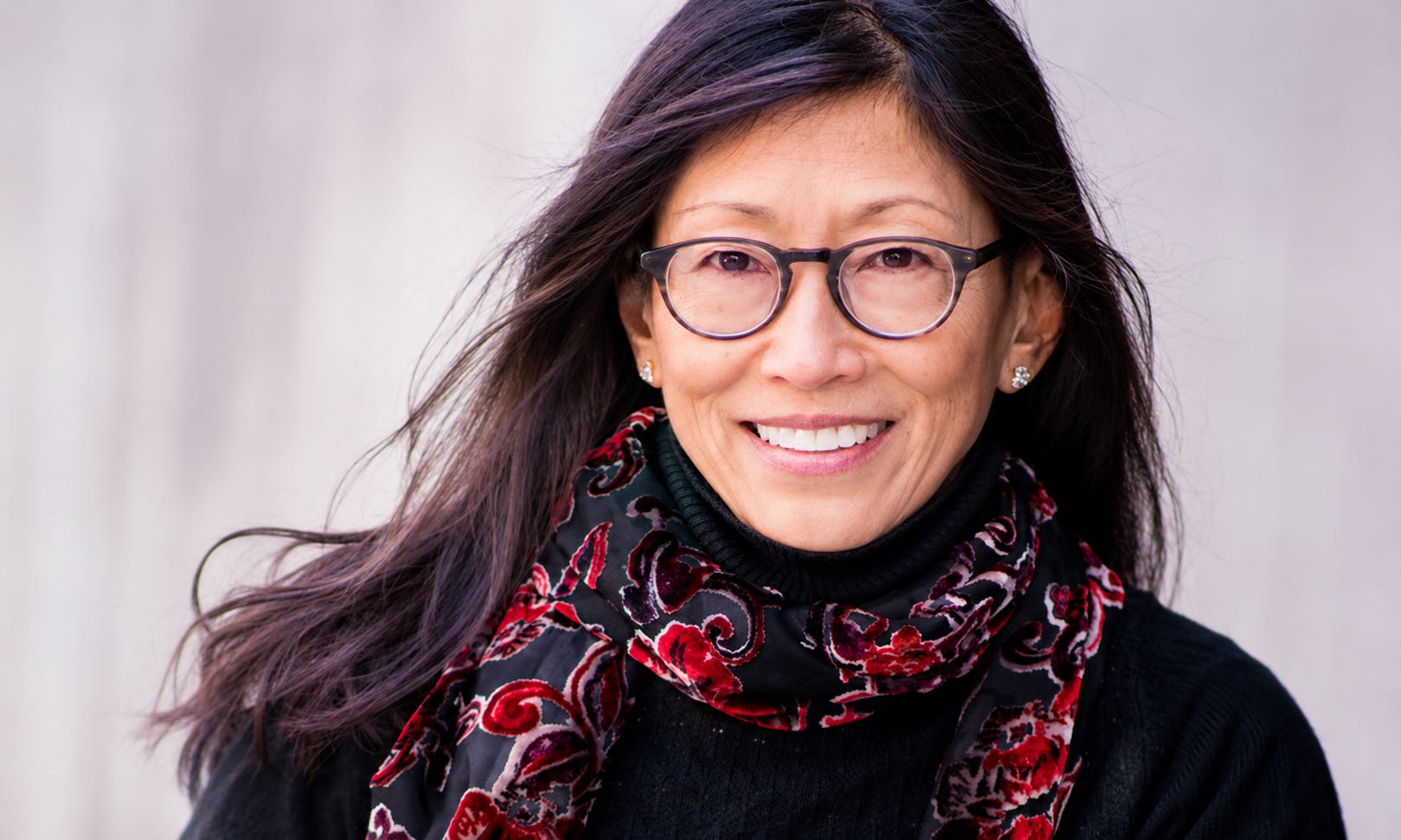
Molly Tschang makes an attention-getting promise: “I make what’s hard to say, easier.”
The founder at Abella Consulting and creator of Say It Skillfully, a video series, podcast and book, helps senior executives and teams build stronger chemistry, clarity and trust for stronger leadership and successful collaborations.
Tschang spent 20+ years at Cisco where she navigated 80-plus mergers and acquisitions and her business experiences helped her learn how to work with and through organizational complexity.
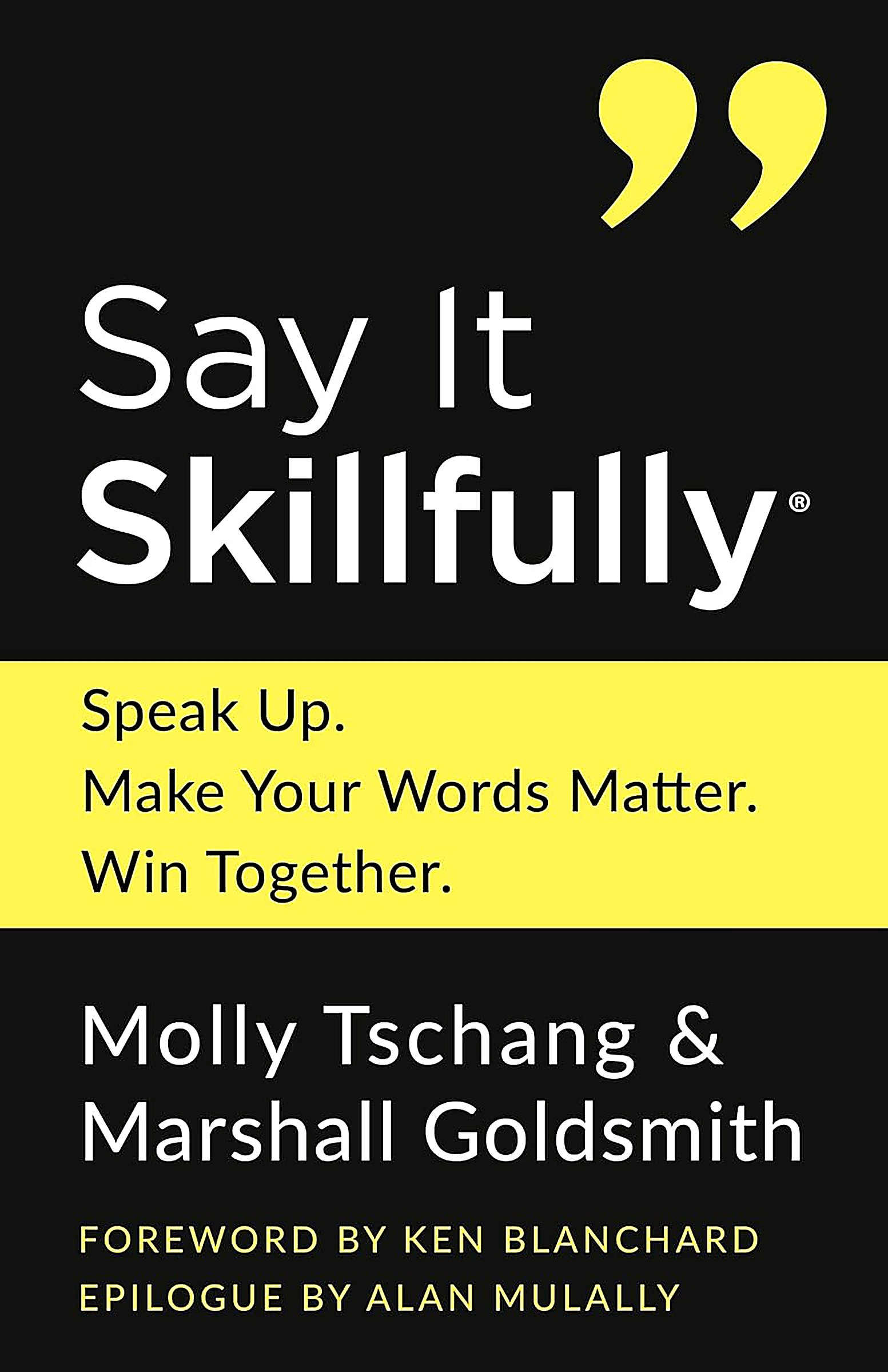
She co-authored the book, “When You Say It Skillfully: Speak Up, Make Your Words Matter. Win Together,” with Marshall Goldsmith and in it presents the You - Me - We framework and details for the reader what makes it a trustworthy application.
“It’s simple enough to become instinct, rather than a script,” Tschang says.
“At its core, it asks you to move through three quick questions,” she adds.
“Me: ‘How am I showing up right now, have I set aside the ego or emotion in my way and am I clear on my intention?’
“You: ‘Can I genuinely see this from the other person’s experience, not just mine?’
“We: ‘What actually serves the whole, beyond either of us individually?”
Something important and beneficial happens in this process.
“That sequence is what lets you raise something hard without damaging trust or losing the room,” Tschang asserts, because “you’re not leading with your position, you’re leading with awareness.”
The process scales in both directions, which helps make for a durable framework.
“For an individual, it’s a simple, flexible way to use your voice with clarity, compassion and confidence.
“For an executive or a board, it’s a practical way to protect enterprise value through candor: surfacing risk earlier, holding people accountable and converting friction into aligned execution, before an issue becomes a performance, culture or governance failure,” Tschang says.
Her experiences and observations helped her recognize something illuminating.
“One thing that years of board work and executive advising taught me is that most leadership issues are, underneath, communication issues,” Tschang says.
“That’s what led me to write ‘Say It Skillfully’ and it’s probably why people tell me I’m unusually skilled at navigating conflict without creating casualties,” she adds. “It’s not a talent so much as a framework I trust enough to run on autopilot.”

Situations that inspire thoughts of uncertainty or anxiety can involve risk yet also present opportunities.
“The clearest signal for me is what I call ‘being in the bubble,’” Tschang begins. “You have a thought but you’re hesitating on whether to say it out loud. That hesitation itself is information. It means something in you has already flagged that this moment matters, even before you’ve decided what to do about it.”
A person can conduct a brief, conscious meeting with themselves.
“It’s a quick internal run-through: ‘What’s actually going on for me right now, what might be going on for the other people in the room and what would genuinely serve the whole conversation, not just my point of view?’ Tschang proposes.
“That’s the real-time version of the framework — less a formal process than a fast check-in with yourself.”
She brings up a point that may be surprising and comforting.
“Speaking up doesn’t mean you need to arrive with a fully-formed argument,” Tschang says. “Often the better move is to test the waters first; Something like, ‘I have a thought that might be a different angle than what we’re hearing. Is now a good time to share it?’”
This works better, she points out, because, it “creates an opening for people to pull you in rather than forcing your way into the conversation.”
She recommends then pausing and patiently observing and noticing what happens.
“Watch how people respond: Are they leaning in, saying, ‘Yes, please, go ahead’ or is there a different, more guarded energy?” Tschang says to ask oneself.
“Reading that is a skill you build over time — gauging the room’s actual appetite versus your assumption about it,” she teaches.
Tschang shares what her repeated, extensive experiences have shown and taught her.
“Here’s what I’ve found again and again: People usually do want to hear you. They just don’t always make that obvious,” she reveals.
“So if it’s not clear, you create the opening for others to be more explicit and that, itself, is a way of being part of the solution rather than waiting to be invited into it.”
Communication effectiveness is a necessary professional skill. It’s not always natural.
“Everyone struggles with this at some point, it doesn’t matter if you’re CEO or the newest intern,” Tschang says. “If you can’t get your ideas out, influence the people who matter most or sell what you actually believe in, you’ll never have the impact you’re capable of or get recognized for what you contribute.”
She speaks to the very real emotional and psychological component.
“That’s deeply personal. The moment you realize it’s on you to show up and create that space — nobody’s going to do it for you — is genuinely empowering,” Tschang teaches.
Developing skills and confidence do something beneficial for a person, professionally and personally.
“And when you do, it doesn’t just lift you: the people around you get heard too, their ideas get credited and built on,” Tschang says.
“When you use your voice, you show others they can use theirs too.
“You model what it looks like to hear hard news and respond in a way that increases safety instead of risk. “
This changes a team culture, if not an entire organizational one.
“When everyone embraces that — that fears are real, that a shared reality is essential, that communication is a team sport in service of the greater good — the very next day is better: more productive, more respectful, more rewarding,” Tschang argues.
Saying the Quiet Part Out Loud
She admits that she doesn’t express a certain notion often yet she is willing to do so here today and that’s, “we all know that harnessing the full diversity of people, places, ideas and experiences gives us the best shot at solving hard problems,” Tschang says.
“But the quiet secret is that unlocking that diversity requires a higher communication capability or it becomes a real train wreck,” she warns.
“Anyone who’s sat on a Teams call where people simply can’t hear each other knows exactly what I mean: all that potential in the room and none of it actually gets used.”
Pain as the Emotional, Psychological Driver
Tony Robbins, the entrepreneur, personal development practitioner and media personality, has said that when you experience enough pain, you are more receptive to change and that’s a point that Tschang addresses too.
“What makes people actually invest in learning this is the pain it removes,” she proposes. “How many hours a week do you lose to saying the wrong thing, saying nothing at all or being misperceived and having to clean it up afterward?
“That’s real time and it follows you home as real anxiety.”
That however can eventually come to act as the catalyst to improve.
“Build this skill and that pain goes away,” Tschang asserts. “What’s left is peace of mind: knowing you can show up, say what needs to be said and be understood the way you meant it.”
She breaks it down to what she believes is at the core.
“That peace of mind, more than technique, is what people are actually investing in.”
Tschang doesn’t make a promise she knows that she can’t keep.
“Each person is unique and has to find their own voice; I can’t find it for them,” she says. “How we speak up isn’t one-size-fits-all, so the real work is finding the words that work for you specifically.”
That is the commitment for her, to assist people in moving towards those answers.
“That’s the mission I’m on and here’s the paradox: this is arguably the number-one success factor in life and almost nobody is ever taught it — not in school, not at work,” Tschang says.
“That’s the vision underneath all of this for me: a world where we Win as One, where people speak without fear and feel heard, where we work together to make good ideas great, let go of what no longer serves us and create real value and meaning, not just at work, but in life.”
She wants to paint an appealing picture of what is also possible, rewarding and a relief.
“When you Say It Skillfully, the people around you rise,” Tschang says.
“And so do you, as you are no longer managing what you didn’t say or worrying how what you did say landed.”
This may come to be viewed as not only helpful but necessary for maximizing the success of missions and people’s personal career goals.
“When everyone can say what needs to be said, you get transparency, especially around the disconnects, where people aren’t actually aligned,” Tschang explains.
“Transparency is your friend. It’s the only way you find out you’re not on the same page. That’s what creates an accurate shared reality: the hard facts and the human experience, together.”
That’s the desirable territory to which we should want to travel and regularly operate.
“And that’s what lets us make the best decisions, execute with speed and achieve the greatest outcomes,” she says.
Publisher’s Note: Free resource, as a gift from Molly — “a simple, flexible framework for turning your messiest conversations into clarity, compassion and confidence.”
Please share if you think this can be beneficial to other people.
Subscribe for free (or paid, for additional benefits)
Communication Intelligence is a newsletter of interviews, analysis, insights and recommendations, as well contributor’s Insights & Advisory.
This next week, the newsletter will debut both the Intelligence Brief and the CI Column, as new features, for paid subscribers.
In addition to the newsletter, Communication Intelligence is offering something I hope will be practical and valuable: Executive Editorial Services.
These items are to help communicate in a more personalized, bold, effective manner. The deliverables are from a human with professional judgment and nuance, not AI.
You can learn more at this link within the newsletter.
Thank you Michael for "being part of the solution" and helping your community be who they are and say what needs to be said—skillfully. It is to me the most empowering skill. Here to encourage and help all to use your voices with clarity, compassion, and confidence and make the difference in life that matters to you!
After enough years in organizations, you start to realize that communication failures rarely announce themselves as communication failures. They show up as missed opportunities, execution problems, and culture issues. The ability to surface reality early is one of the most valuable leadership skills.
Have a good Tuesday, Michael & Molly