

Improvement Without Condemning Ourselves
Framing the conversation with oneself and the process of adjustments
Looking inward at traits of ours may be extremely challenging, for most of us. There are emotional and psychological reasons involved. Doing so to learn and take steps in a new direction, however, doesn’t always have to be painful and seemingly impossible.
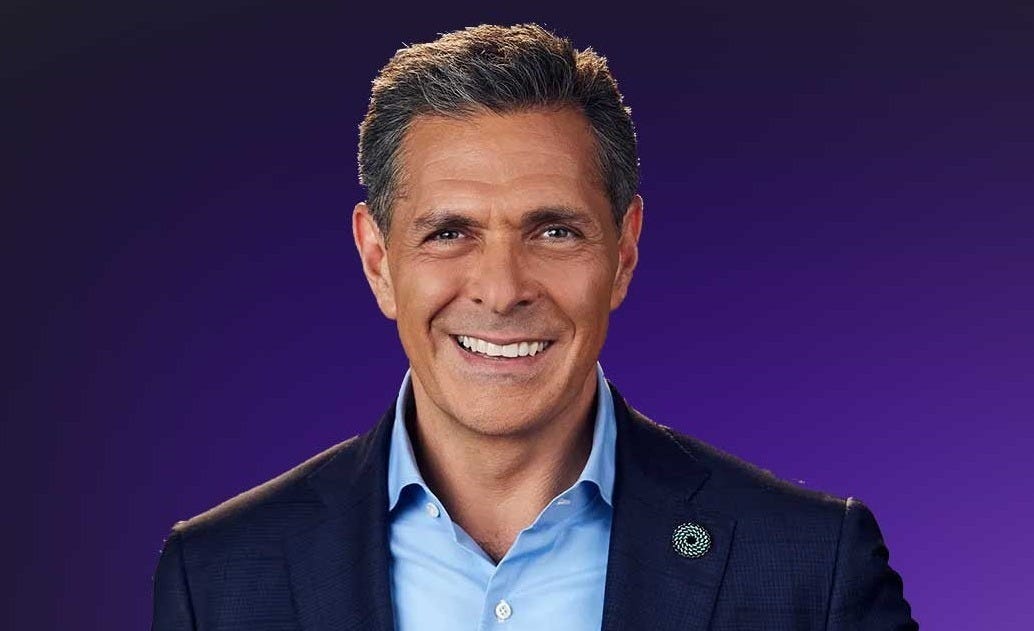
“It’s essential in life for you to be self-critical and introspective and not let that affect your self-worth,” said Daniel Lubetzky, the founder at snack food company Kind, in a street interview with the Dose of Society account page on Instagram.
The viewpoint and advice is worth examining and discussing.
“Self-critical and introspective aren't the same things and they carry different connotations,” Brittany Martin Déjean is quick to point out.
The keynote speaker and coach who helps high achievers with their patterns of overthinking, second-guessing and self-criticism, explains the important differences.
“Being introspective means you're willing to ask questions and look at yourself, your beliefs and your actions objectively,” she says.
“Self-critical comes with a negative connotation that can lead certain groups to spiral in ways that threaten their confidence and self-worth.”
Martin Déjean points to her work with clients as an example.
“Take high achievers, who are already often trapped in what I call the FOMU, the Fear of Messing Up Cycle: Losing time to overthinking, second-guessing and self-punishment. When they fall short, it can turn well-intentioned self-criticism into a reason to never try again,” she has witnessed and says.
This is concerning and detrimental.
“Society often rewards perfectionism and for many, we were never taught the muscle of how to actually make and recover from mistakes, without ripping ourselves apart,” Martin Déjean stresses. “Without guidance, our self-worth can be so wrapped up in performance and external validation.”

It’s more than semantics with the wording Lubetzky used and what experts recommend because of a common reality.
“Most high achievers would characterize themselves as people who are harder on themselves than anyone within their circle of input and influence,” says Cheryl Haynes, a certified executive coach, speaker and strategic foresight practitioner at AchieveMentor, where she aids clients in expanding adaptive capacity and leading through uncertainty.
“Although self-reflection is necessary for self-awareness, layering on a ‘self-critique’ can inadvertently impact self-worth by enabling the individual to focus on their failure to live up to expectations, more than on the elevation of their present thinking,” she adds.
That’s a problem, Haynes stresses.
“This can harden a blind spot that is often fed by messages the person has internalized from childhood or from peers during their teen years,” she explains.

Déjean also sees a way to adjust Lubetzky’s wording for optimization.
“I would say instead, ‘It's essential to see and own our self-worth beyond the validation of others and to also be introspective in ways that enable us to learn and grow,’” she suggests.
“I appreciate the quote removing the connection of self-criticism to self-worth, but again, I think too often in society we celebrate the things like hustle culture and perfectionism, etc. that reinforce unhealthy habits.”
It’s helpful sometimes to separate decision making from who someone is as a person.
"Judge what you chose; not who you are,” offers Stacy Sheller, a licensed marriage and family therapist at The Grove Recovery Community.
She says that this has personally aided her growth.
“This helps me grow as an individual without losing my self-confidence,” Sheller says.

Focusing on the best starting point can help direct one’s thought process and actions in a more beneficial manner.
“I advise leaders to examine their thinking through the lens of the values and beliefs that have influenced their initial response versus encouraging them to be self-critical,” Haynes says. “It’s all in the reframe.”
She explains why this can prove highly effective.
“Examining the drivers behind their decisions is designed to reduce as much emotion as possible from their introspection,” Haynes points out.
“This presents an opportunity for them to seek out and include other views, that could elevate their thinking, that are missing from their first impressions.”
Please share if you think this can be beneficial to other people.
Subscribe for free (or paid, for additional benefits)
Communication Intelligence is a newsletter of interviews, analysis, insights and recommendations, as well contributor’s Insights & Advisory.
This next week, the newsletter will debut both the Intelligence Brief and the CI Column, as new features, for paid subscribers.
In addition to the newsletter, Communication Intelligence is offering something I hope will be practical and valuable: Executive Editorial Services.
These items are to help communicate in a more personalized, bold, effective manner. The deliverables are from a human with professional judgment and nuance, not AI.
You can learn more at this link within the newsletter.

Reflection and looking inward is key to living, not to optimize into a "better" version but to not operate from a frame of mine, which is automated. I find carving out time for aimless reflection routinely is beneficial to turn the flashlight on something seemingly small but important that we may be missing.
Thank you for sharing this essay and the viewpoints
This is especially relevant for leaders. The ability to examine your decisions without collapsing your identity into the outcome is probably one of the most underrated leadership skills. It's also one of the most difficult things to do.
Happy Friday Michael