Helping Your Leaders Through a Mediocre Beginning and Their Uncertainty
How one leader inspired one of his hires in a difficult time and that person ended up reaching the top of the mountain in their profession and industry
Certain jobs inspire more feelings of pressure and stress and the people in them are often left on their own to endure and perform at the high, expected level of competence. It’s not easy. One leader has been fondly remembered for his approach in one such situation
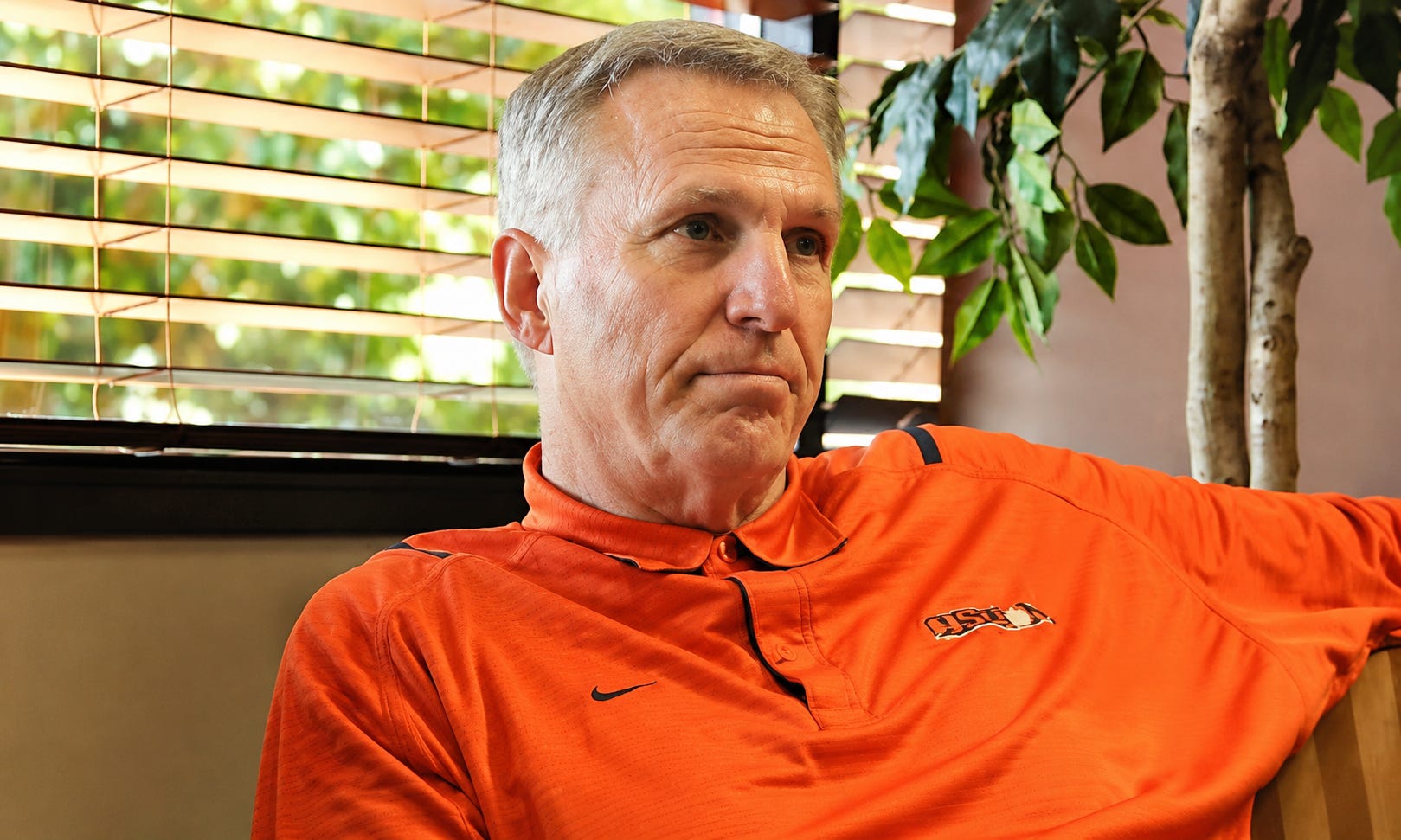
Terry Don Phillips, a former athletic director at Clemson University recently passed away and an article reporting on his passing brought up a story from a year ago told by Dabo Swinney, the head football coach at the school, a man who would eventually reach the pinnacle of his profession and industry, twice leading his teams to college national championships after an inglorious beginning to his tenure.
That success, however, isn’t what is most important about Phillips as a leader and Swinney, the man he hired to be a leader as well.

Early in Swinney’s coaching career, before success began to show itself, he learned that Phillips was waiting in his office to speak with him following a mediocre season.
Swinney naturally assumed that bad news was going to be delivered.
“I go from thinking I’m getting fired to Terry Don Phillips telling me how much he believes in me,” Swinney said.
He recalls the surprising, uplifting words and confidence that Phillips communicated.
“‘Hey, there’s going to be a lot of criticism and there’s going to be a lot of this and that. I want you to keep doing what you’re doing,” Swinney said.
“I want you to know that I’ve got your back.
“I believe in you, more now, than even when I hired you.”
Swinney’s career coaching mark, to date, after that inauspicious start: a sparkling and respected 187 wins against 53 losses
The uneasiness or anxiety about getting terminated can negatively impact confidence.
When a boss communicates that they know there is going to be criticism and in the case of Phillips and Swinney, it was coming for both of them from multiple stakeholders, yet they support your work, clearly recognize what’s working, before the results take place and let you know, “I’ve got your back, I believe in you, now more than ever, when I hired you,” that does something positive for someone.
Swinney’s nervous system could have been experiencing a threat response or feeling of dread and a loss of status, livelihood, public embarrassment and professional failure.
While many leaders support people when the metrics and favorable outcomes are present, far fewer tolerate doubt, upset and criticism about one of their charges. They don’t extend confidence before evidence and proof validate a hiring decision.
Phillips decided to do differently, to alleviate excessive stress on one of his leaders. He noticed progress, even if the ultimate outcome — wins — weren’t yet plentiful.

”This is a clear example of people-first leadership that creates a sense of belonging and leads to trust and high performance,” says Joey Havens, a workplace transformation thought leader, TEDx talk speaker and the author of “Leading with Significance: How to Create a Magnetic, People-First Culture.”
“Everyone, leaders and team members, have moments when they ask the question: ‘Am I good enough?’” he adds.
They might not always expect support yet that doesn’t mean it wouldn’t be valued.
“We are looking for that affirmation from those we work with and for,” Havens contends. “This brilliant conversation gives the team member (Swinney) confidence, a connection and a strong sense of belonging.
“This leader (Phillips) is elevating those around him, demonstrating connection, caring, appreciation and belief.”

The support and confidence can prove lasting in the recipient’s memory and psychology.
“I feel that occurrences, such as these, remain ingrained in people for such a long time,” asserts Cache Merrill, founder and chief technology officer at Zibtek, a software development, company focused on trends, strategies and product success.
He understands the common mindset, especially where expectations are high.
“I believe the majority of employees have a level of expectation in being supported in the success of the project, not in times of need,” Merrill adds.
“A leader stepping forward to support an employee during hardship, not responding immediately to criticism, completely alters that individual's approach to pressure in the future.”
His observations have made an impression on him.
“I have seen individuals' confidence blossom solely on the premise that somebody still supported them, even when times were difficult,” Merrill recalls. “That confidence generates loyalty and usually only produces individuals to push that much harder.”

People want to succeed and it can be discouraging or painful when it’s not happening or is slower developing than expected and demanded.
“We are our own worst critics,” says Carlos Hernandez, a leadership expert and the president at Coach Kind.
“If we have aspirations of bigger and better things, we are even worse to ourselves. The great ones expect the most of themselves and they’ll be the hardest on themselves if it doesn’t go to plan.”
This is an important, valuable time, he adds, for those who hired and oversee them.
“As a leader, these situations bring up the grandest of opportunities,” Hernandez stresses. “If your team member is hard on themselves, you hired the right person. They actually care.”
He offers his recommendation.
“Speak real belief into them. Let them know why you think they are equipped to excel and remind them why you hired them to do this exact thing,” Hernandez says.
“Great leaders are the ones that can help their team members reset their mindset. Do that and they’ll give you insight into their struggles, so you can coach accordingly.”

The boss and organization, with the approaches mentioned above, can pave the way for an employee who is not yet producing to standard and succeeding in the mission.
“One of the first characteristics that consistent support achieves, is that it removes the fear, which is inherent within individuals during troubled times,” Merrill says.
He elaborates to further paint a picture of the common reality.
“If the individual fears that the current problem could ultimately cost them their job, they will likely second-guess every step,” Merrill argues. “When support, however, is still given, I have found that you can observe almost immediate change.”
Another benefit emerges.
“Clarity empowers the team member to continue to take risks and lead in ways that makes the entire team better,” Haven says, adding that, “This is top-level leadership.”
He explains how this often works in the recipient.
“This expression of belief releases the energy for the team member to stretch for his full potential and this energy is contagious to the entire team,” Havens explains.
“The leader is demonstrating the power of ‘Trusting First,’ which leads to the team member leaning in more — discretionary effort — to be worthy of that trust.
“This vulnerability leads to more trust within the team and high-trust teams move fast and that results in high performance.”
Trust verbally invested in another person acts as a catalyst.
“There is no greater benefit than having the right person motivated to work on the right thing, with the confidence in their capabilities,” Hernandez says.
“Those team members run through walls, or defenders, for the greater good: the mission of the organization.”
Phillips’ belief in a hire of his who was not yet performing to standard helped him communicate his confidence in a middle manager, so to speak, at a time of great need, for that person, the mission and the organization.
Phillips helped create a fertile, psychological and organizational environment for the national excellence, brand and financial rewards that, over time, resulted.
Subscribe for free (or paid)
Communication Intelligence is a newsletter of interviews, analysis, insights and recommendations, as well contributor’s Insights & Advisory.
This next week, the newsletter will debut both the Intelligence Brief and the CI Column, as new features, for paid subscribers.
In addition to the newsletter, Communication Intelligence is offering something I hope will be practical and valuable: Executive Editorial Services.
These items are to help communicate in a more personalized, bold, effective manner. The deliverables are from a human with professional judgment and nuance, not AI.
You can learn more at this link within the newsletter.