

Discussing Assumptions - Ours and Other People's - in Interactions
Where problems begin, become habitual and costly and the path to smarter communication and improved outcomes
Perception, we constantly learn, is not always reality and that can play a large role in how human interactions develop and their outcomes end up stressful and disappoint.
“What if your biggest communication challenge isn’t language at all, but the assumptions you carry into conversations without even realizing it.”
Namrta Bangia
Writer and publisher of the
Make an Impact newsletter on Substack
It’s a reasonable question and it inspired agreement and debate.
Banjia is talking about, we can presume, erroneous and false assumptions, not ones that are factual, with evidence and proof, and beyond reasonable arguments.
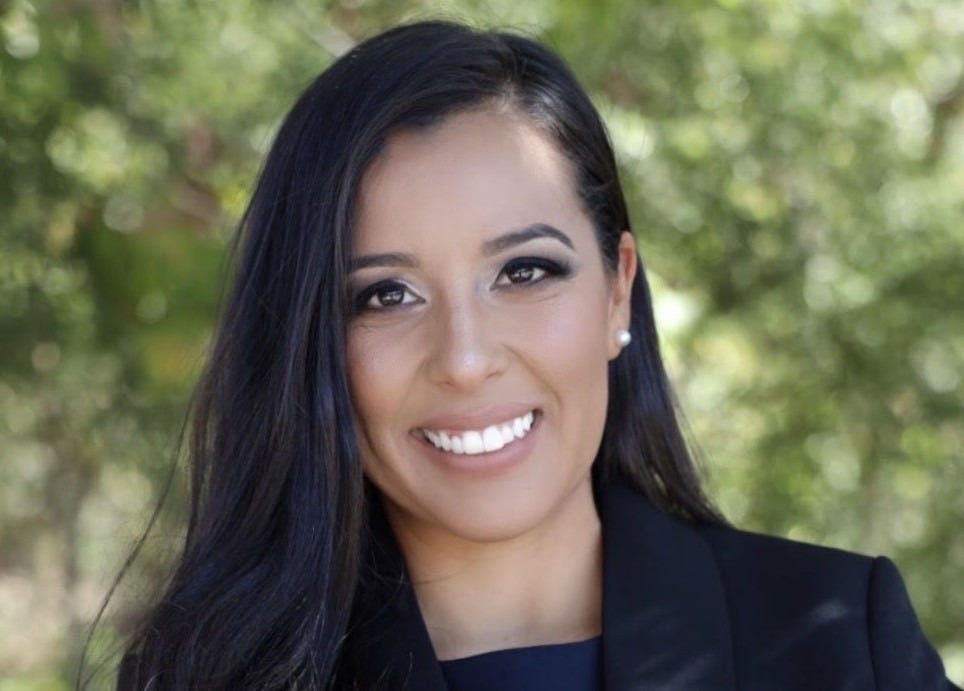
"We all carry conversations differently, which means, some of us will ask clarifying questions while others will make assumptions about what the message is,” explains Maritza Mikolich, PsyD, a licensed marriage and family therapist (LMFT) and practice owner.
“Unconsciously we can carry out conversations, initiate, ignore or dismiss messages based on our beliefs,” she adds.
It’s not just what we’re communicating.
“Most communication problems don’t actually come from saying the wrong words,” says Lindsay O’Shea, a clinical psychologist, coach and the founder at UnPattern, where she focuses on helping people understand the invisible patterns that quietly shape how they communicate, connect and relate, often without realizing it.
“They come from the assumptions we bring into conversations without even realizing it. All of us have patterns in how we think, feel and respond to others.
“These patterns usually form when we’re kids, based on our early relationships. That’s when we learn things like whether it’s safe to speak up, whether people listen to us, and what we expect from connection.”
It’s logical that these would take deep root in our cognitive processing.
“Those early experiences become a kind of invisible filter,” O’Shea says.
“As adults, we don’t just hear what someone is saying, we interpret it through that filter. Our brains also like to be fast and efficient, so they try to predict what’s happening, instead of slowing down and listening.
“That’s why, during conversations, many people are already thinking about what they’re going to say next instead of really hearing the other person.”
That, of course, creates problems; sometimes, significant ones.
“When we don’t question our assumptions, conversations turn into guessing games,” O’Shea says. “We think we know what someone means, yet we hear only parts of what they say or we jump to conclusions.”
That’s not all.
“We stop being curious and start looking for proof that we’re right,” she adds. “This leads to misunderstandings, hurt feelings and missed chances to truly connect.”
The reality?
“The real problem usually isn’t language at all,” O’Shea says. “It’s the assumptions quietly shaping how we listen, what we believe and how we respond.
“Once we start noticing those assumptions, communication becomes clearer, calmer and a lot more effective.”

“We all harbor unconscious biases… These biases live below conscious awareness and while they sometimes make us jerks, the brain evolved them for efficiency and safety. Accuracy…less important,” says Oriana Sparks, who teaches organizations, individuals and teams how to use calm as a strategic leadership advantage.
“They help us make rapid sense of a complex social world, but they do so by generalizing, categorizing and predicting, often imperfectly.
“Assumptions are the expressions of those unconscious biases happening in real time.”
There are a variety of ways we fall into this natural thinking.
“We assume ‘meaning’ based on our family dynamics, previous workplaces, old power struggles, cultural conditioning… the list goes on,” Sparks says. “We assume the intent of the other person — this one is particularly dangerous — perhaps, we assume they are being defensive, disengaged or disrespectful, when in reality they may simply be overwhelmed, uncertain or protecting themselves.”
There is something that might surprise us and other people to learn and remember.
“Our assumptions are about us and have almost nothing to do with the other person, though we will vehemently insist they do,” Sparks says. “More damaging still, is that our assumptions, all wrapped up in our own flaws and traumas, very directly diminish the current state, emotions and intentions of the other person.
“This makes effective communication, and therefore relationship-building, very challenging.”
The flaw is our weakened or missing poise, patience and ability to be humble when triggered.
“Our assumptions distort listening and cause us to hear though filters instead of presence,” Sparks says.
“Often when someone offends us, we are responding to stories we’ve invented rather than what’s actually happening. Given that moment-to-moment presence is at an all-time low, I would argue that this is the greatest communications plague of our time.”

“I'd push back on the premise that the challenge ‘isn't language,’” says Federico Malatesta, founder at FM Transformational Coaching, where he works with senior leaders navigating complex transitions.
“Language is never neutral. The words we choose carry both histories and context, our own and others,” he asserts. “So when I speak of ‘excellence’ or ‘trust,’ I'm not transmitting universally-understood, neutral concepts. My words will be received differently depending on what those terms have meant in listener's life.
“We speak the same vocabulary but not the same language.”
There is a misunderstanding, maybe more than one, taking place.
“The most common (assumption) is assuming the other person shares our context, our values, our sensitivity,” Malatesta says, warning, “It's hardly ever the case."
There’s another one he’s noticed and learned.
“Mistaking our clarity for theirs,” Malatesta adds. “What someone hears is shaped by their genetics, upbringing and experiences. The words are the smallest part.”

“Very often, we have more biases than we are aware of,” says Ramiro Castano, a licensed marriage and family therapist (LMFT) and owner at Find Your Relationship.
“Many people erroneously believe many subjective things are objective, including the meaning of words,” he points out. “Take something as simple as the world ‘respect.’ While the word has a definition in the dictionary, if you ask 5 different people how to show someone ‘respect,’ you are going to get 5 different answers. The same is true in inverse with the word ‘disrespect.’
“They will mean different things to different people but quite often, we carry the assumption that when we use a word, the person who we’re talking to is going to understand that word in the same way we do, which often isn’t the case.”
Knowing this, risks become more apparent in our minds.
“We think they’ll ‘get’ what we mean,” Castano says. “These differences are prevalent with many words all around us and those differences are going to be even more pronounced when the conversation is emotionally charged.
“What ends up happening often is that the message we give is not the message the other person receives.”

“More often than not, our unconscious or implicit bias is what steers things in the not-so-helpful direction,” says Sage Breslin, PhD, a transformational psychologist and coach and the CEO at the Sage Wisdom Institute.
“Implicit bias is what we develop as a result of our experience: sometimes positive and more often than not, negative,” she adds. “Because much of experience is non-verbal or visceral, we imprint it that way. We unconsciously store it in our bodies and our behavior towards others may reflect that bias when triggered.”
There must exist a reliable way to recognize our problematic assumptions and enter and participate in communication in a more poised, skillful manner for improved effective communication and interactions.
“The most reliable way to identify shaky or false assumptions isn’t intellectual, it’s physiological,” Sparks says. “Because assumptions are rooted in ‘old stories,’ they show up in the body first: tension, urgency, the need to be right, the need to be liked: these are our red flags.”’
A Reliable Response Strategy
“They key is noticing those signals and creating a pause,” Sparks advises.
“The pause is the skill. It interrupts reactivity and restores the power of choice.”
She explains why:
“Once we are back in a regulated state, we gain clarity and from that clarity comes the ability to be a better listener. Instead of entering conversations armed with conclusions, we can open up to curiosity and shift from wanting to prove something, to wanting to understand something better.”
Greater self awareness is not a “nice-to-have” skill. It’s invaluable for communication with ourselves and interacting better with others.
“One way to identify our assumptions is by being aware of our own biases and belief systems,” Mikolich says. “It is important to ask ourselves, ‘is what I am thinking true or am I speculating this to be true?’”
That may be quickly dismissed by us yet it’s important to realize its value.
“Being an effective communicator is a key ingredient to being in a healthy relationship,” Mikolich says.
“It is important to be tactful, intentional, use ‘I’ statements and be respectful of someone else when communicating.
“Being curious about someone else’s perspective, thoughts and feelings is a way to actively engage in a healthy conversation.”
“A reliable way is to slow the conversation down, especially inside your own mind,” O’Shea counsels. “Most unhelpful assumptions show up as quick reactions: a spike of defensiveness, an urge to explain yourself or a strong feeling that you already know what the other person means.
“Those moments are clues. Instead of treating them as facts, you can treat them as signals that an assumption may be running the show.”
She outlines what might prove more beneficial for us.
“You can ask yourself simple questions like: ‘What did they actually say? What am I assuming they meant? Is there another possible explanation?'“ O’Shea says.
“This small mental step shifts you from reacting to listening. It helps separate the present conversation from old experiences that may be coloring it.”

Learning that premature reactions, even before communication, can be, at least at times, detrimental to our own interests, is vital.
“Entering communication skillfully also means leading with curiosity instead of certainty,” O’Shea says. “When you’re unsure, asking a clarifying question or reflecting back what you heard keeps the conversation grounded in reality rather than guesswork.”
She explains why.
“It shows respect for the other person and reduces the chances of misunderstanding. You’re no longer trying to win the conversation, you’re trying to understand it,” O’Shea says.
She elaborates:
“When you slow down, check your assumptions and stay curious, communication becomes more steady and effective. You show up calmer, the other person feels more heard and the conversation is more likely to serve its real purpose, whether that’s connection, problem-solving or simply being understood,” O’Shea details.
Castano asserts that mutually establishing what is and isn’t can be helpful.
“I think it starts with trying to really identify our potential biases, especially those that are actually subjective and not objective. If something can be agreed or disagreed with, it’s very much subjective, an opinion, where as something that cannot be disagreed with is objective, as a fact.
“Anything that states a judgement: good or bad, right or wrong, etc., will always be subjective to individuals. Once we’ve identified these things for ourselves, we have to realize that whoever we talk to may not agree or understand what we’re trying to say just because it makes sense to us.
“It then helps, while in conversation, to be asking yourself, ‘If I say this in this way, what could the other person hear,’ and then clarify or extrapolate more of what you are trying to say to avoid the possible misunderstanding. Spell it out.
“And if someone uses a word like ‘respect,’ ask ‘what do you mean by that?’ so that you’re not assuming they mean what you think they mean.”
Work with the Reality and Look Inward at First
“It's impossible to fully identify our assumptions beforehand,” Malatesta says.
“What we can do is notice when a conversation isn't landing and consider the possibility that it is about what we said and how we said it, rather than evidence that the other person is the problem.”

A Better Way Once an Interaction Takes an Unwanted Turn
“When someone reacts unexpectedly, the instinct is to explain ourself again,” Malatesta says.
That natural default reaction isn’t useful.
“The better move is to get curious about what they heard,” he recommends.
“Ask them: ‘I'm sensing this isn't landing the way I thought, what are you hearing?’” Malatesta recommends.
“That simple shift often allows for the gap between intention and reception to surface.”
Less Confidence is Sometimes a Positive
“Another useful practice is to enter conversations with less certainty,” he says.
“Not false modesty but openness to the possibility that you're missing something, that the conversation is not closed after the first utterance.
“When we hold our view lightly, we also tend to listen differently,” Malatesta says.
“We stop scanning for immediate and absolute agreement — does it ever happen? — and start noticing what the other person is actually trying to tell us.”
Subscribe for free (really) or paid (for additional benefits)
Follow on LinkedIn for more
Communication Intelligence began as online magazine (2021-2024) on another platform and during that time, also became a free-or-paid newsletter (2023 - present) on Substack. The C.I. brand additionally offers individuals and organizations a variety of services, from written communications as well as communication consulting and coaching.
The newsletter is written by a former newspaper reporter, magazine writer, talk show host and communications consultant and advisor.

If you’re interested, Communication Intelligence also offers services. Don’t see what you need or want? Send a message to start a conversation.
A potent reminder that most “communication issues” aren’t about wording at all - they’re your old stories and assumptions running the show before you’ve truly listened.
Thank you for weaving these perspectives together so thoughtfully. What struck me re-reading the piece is how each contributor arrived at the same destination - curiosity over certainty -through different avenues: the body, the pattern, the word. That convergence seems like its own kind of evidence. Glad to have been part of the conversation.